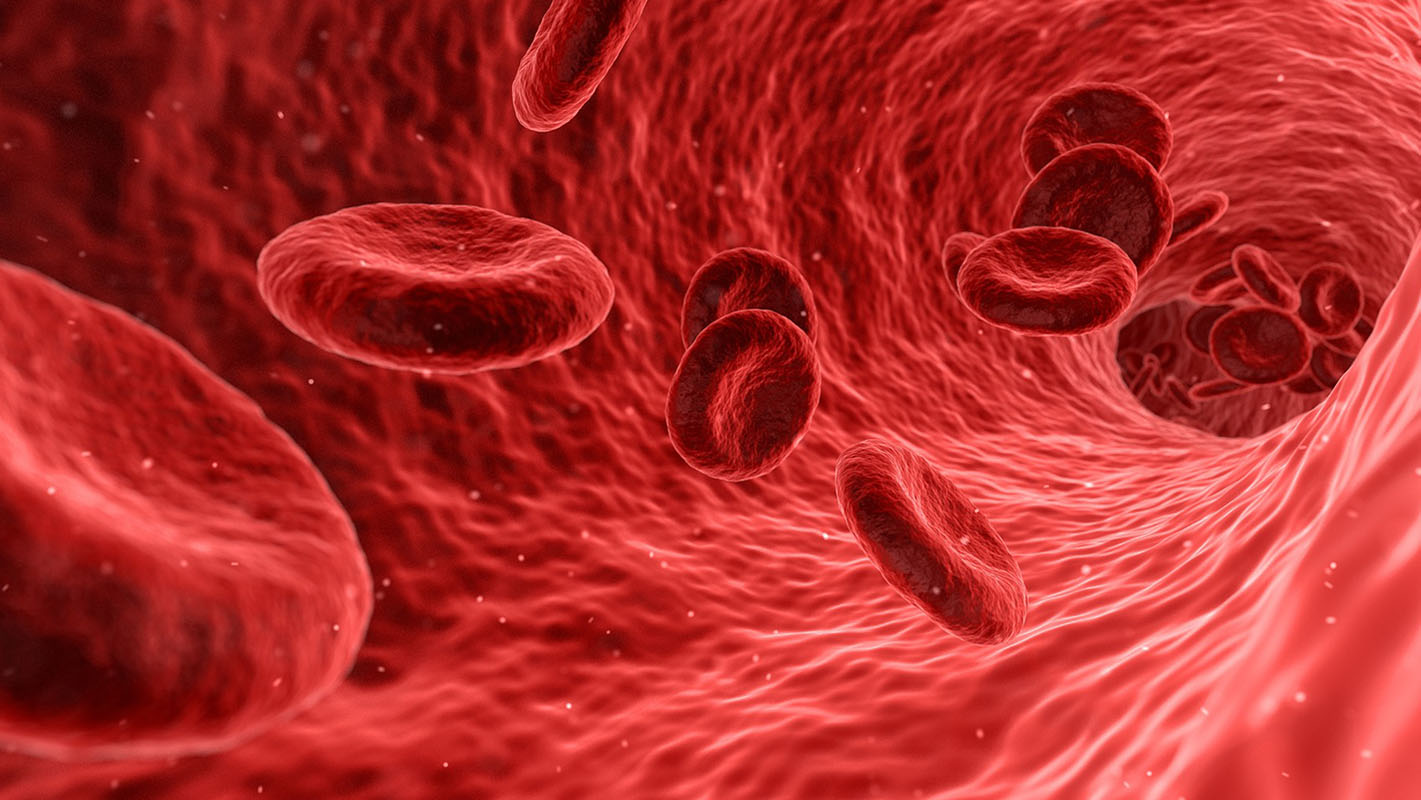
Computational modeling techniques, such as FEA (Finite Element Analysis), CFD (Computational Fluid Dynamics), and MD (Molecular Dynamics) represent a set of powerful tools for accelerating product development and the innovation process. Accurate models and insightful simulations can be used to replace physical iterations as innovators test new ideas, materials, or designs. These virtual trials can uncover new understandings of complex systems and yield significant time and cost savings. But the modeling process itself can present unique challenges that require an “innovation mindset”.
Model construction typically includes the integration of multiple technical disciplines – engineering, mathematics, software, domain expertise. Assembling and integrating these diverse skills can be daunting to project managers. But the challenges of model construction go beyond complicated project management, as the modeling team often is faced with incomplete information or poorly understood processes. As a result, accessing and understanding critical information can require skills that can exceed the core competencies of the research team. In fact, the model-building process often requires unique problem-framing and problem-solving skills to successfully deliver a simulation program that yields new insights and delivers against expectations.
Modeling Fluid Flow in the Eye*
For example, a global medical technology company wanted to deploy CFD modeling to understand the performance of its eye stents in glaucoma patients for considering future product designs. Simulating the aqueous humor flow [Figure 1], with and without the stent, would yield new understandings of the device’s impact on intra-ocular pressure – a critical issue in the management of glaucoma.

While the program stages for model construction shown in Figure 2 are straightforward in concept, in practice, the team needed to address uncertainty and innovation challenges at every step.
Figure 2: CFD Modeling Program Stages

Initially, the modeling team faced the challenge of defining the geometry to be modeled (in this case, the Schlemm’s Canal of the eye, which drains fluid from the anterior chamber and regulates intra-ocular pressure), where no reliable anatomical data existed. To generate this geometry and then build a mesh, the team worked with an eye bank and an ocular pathology lab to secure and analyze cross-sections of both a normal and a glaucomatous eye. Precise microtome slicing was carried out to secure images which could then be processed for model development. However, this painstaking “image transformation” work then presented additional unique challenges because the slices suffered irregular distortion from the applied cover slip. Additionally, identifying the mechanical properties of the tissues was a challenge because eye tissue properties in scientific literature are limited and have a wide spread. Finally, modeling deformation and placement of the stent in the eye was critical for running simulations.
As previously stated, navigating these types of complex tasks goes beyond the expertise of standalone modeling experts or software programs and can derail complex modeling initiatives. But, in this case, the systematic application of problem framing and problem-solving tools to uncover root cause problems and develop directions for overcoming them enabled the team to identify solutions, assemble experts, and integrate the skills needed across a range of scientific domains. As a result, the team successfully deployed computational fluid dynamics to simulate the steady laminar aqueous humor flow through the system and demonstrate that the insertion of the company’s stent leads to a 27-32% drop in intra-ocular pressure (IOP) relative to baseline [Figure 3].
Figure 3: Pressure Reduction by Microstent in Glaucoma Eye

Additional Modeling Applications
Gen5 has successfully developed computational models deploying both CFD and FEA across a wide range of industrial, consumer-product, and medical systems – each involving unique challenges, including:
- Vena Cava Filter* [Medical] – FEA model of the process of removal of a retrievable blood clot filter from the vena cava, enabling the assessment of proposed design risks; Model challenges: Large non-linear deformations, mesh destruction
- Subsea Connector [Industrial] – Advanced FEA model of a graphite seal on a subsea connector to explain the observed malfunction of the seal; Model challenges: Large non-linear deformations, model parameters (Young moduli) ranging by a few orders of magnitude
- Medium Voltage Switchgear [Industrial] – Advanced FEA modeling to build a temperature profile within the cabinet to illuminate design changes that would meet regulatory requirements; Model challenges: Multi-physics (electro-magnetic, thermal, and CFD analysis in 3D)
- Glass Containers [Consumer product] – Advanced Polyflow and CFD modeling to determine temperature field on the surface of the mold in contact with molten glass leading to design of a water-cooled mold; Model challenges: Multidisciplinary; Model parameters (glass viscosity) changing by a few orders of magnitude over the cycle
- Heating Radiator [Consumer durable] – CFD model of heat transfer from the surface of the radiator led to a heat output (W/k) increase by 38% in manufactured prototype; Model challenges: Non-algorithmic design optimization, tune up of the model to match the test protocol
- Truck with Vortex Generators* [Industrial] – CFD model of airflow around a Class 8 truck with vortex generators to reduce the drag coefficient by 3-5%; Model challenges: Essentially 3D model, large scale
- Bleach Bottle [Consumer product] – Non-linear buckling modeling to optimize design of bottle neck position and bottle shape for increase in critical (buckling) force by 54%; Model challenge: Non-algorithmic design optimization.
Conclusions
Gen5’s experience indicates that achieving meaningful results on complex computational modeling initiatives requires more than simply bringing together a team of interested parties or hiring a modeling expert. In fact, many of the requisite core skills mirror the capability requirements of innovation professionals more broadly, including:
- Creative project leadership. The team leader wears many hats as visionary, conceptual thinker, general contractor, integrator, and problem solver.
- Problem framing and problem solving. At multiple points in any modeling engagement the team will encounter problematic challenges and contradictions. Skilled innovators must be able to isolate root cause problems and develop pragmatic solutions that can steer the program to successful completion.
- Talent identification. As the discovery process unfolds, gaining clarity on what skills will be needed and tapping into the right expertise is essential.
- Verification. Access to laboratory and testing facilities is important for verifying model outcomes and validating results.
Gen5 Group
Gen5 brings extensive skills and experience in CFD, FEA, and MD applications. Drawing on its legacy of over 25 years in innovation, the firm offers world-class capabilities in problem framing and problem solving. Importantly, its flexible business model and cross-industry experience enable project leaders to tap into the firm’s global network of subject matter experts to find the right skills needed on each engagement. And importantly, Gen5 researchers regularly carry out proof of principle experiments and prototyping in the development of new ideas and technology deployment. As a result, Gen5 is quite skilled at developing test programs where established protocols do not exist (which is typical for many complex modeling initiatives). In summary, the firm is uniquely qualified to carry out sophisticated and complex modeling and simulation projects, having executed an impressive range of CFD and FEA assignments.
* Results published.